
Governance
#BoomingAfrica: frugal innovation and digital sovereignty
Between myths, models and realities, can frugal innovation serve genuine African digital sovereignty?
1 min read
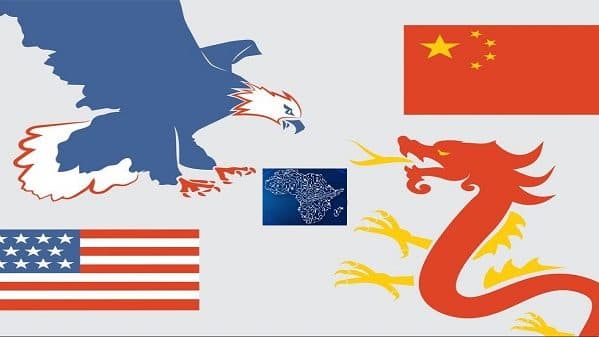
At the heart of the Sino-American tech rivalry, Africa is a contested ground. With what stakes?
The "new silk road", renamed the "Belt and Road Initiative" (BRI), is one of the most ambitious programmes of Chinese President Xi Jinping. Designed to project China's transformative geopolitical influence across the world, the scale and scope of the project are unprecedented. Beijing has committed 4,000 billion dollars of investment in infrastructure and development projects in 65 countries, affecting 70% of the world's population and 75% of the world's energy reserves. The programme is designed to connect the main economic centres of Eurasia by land and sea, many of which once served the ancient silk road two thousand years ago.
According to the news magazine The Diplomat, "the BRI aims to stabilise China's western peripheries, revive its economy, propel non-Western international economic institutions, gain influence in other countries and diversify trade suppliers/routes while circumventing the American pivot to Asia". After taking the time to build economic giants (notably the BATX in the digital field), the Middle Kingdom, through this initiative, takes them to conquer new markets carrying both financing and technologies (5G, submarine cables, satellite navigation systems, etc.). We are therefore facing a demonstration of power.
To achieve this ambition while keeping ahead of its rivals (principally the United States), China mobilises every means and tool at its disposal. In a report addressed to its clients, the company FireEye reports evidence of an increase in cyber-espionage operations linked to the BRI. This report notes in particular that "cyber-espionage activity linked to the initiative will probably include the emergence of new groups and nation-state actors. Given the range of geopolitical interests affected by this undertaking, it may be a driver for emerging nation-state cyber-actors to use their capabilities".
The BRI also aims to strengthen China's geopolitical and economic influence in Africa, capitalising on the significant infrastructure investments made on the continent. Kenya in particular has been the subject of increased attention because of its strategic geographical location, notably for the maritime component of this new Chinese silk road (known as China's Maritime Silk Road Initiative – MSRI).
At the beginning of 2018, Kenya announced that it would lobby for regional projects within the framework of the new silk road. It is indeed with this in mind that China financed the construction of a 480 km standard-gauge railway between the Kenyan port city of Mombasa and its capital Nairobi. According to the plan, this railway should eventually extend to neighbouring countries such as Uganda, Rwanda and Burundi in order to connect them to the port of Mombasa. However, in May 2018, Kenya announced that it would not sign the free-trade agreement under discussion between China and the East African Community (EAC) states, which reportedly caused tensions between Beijing and Nairobi.
The digital silk road in action!
It is in this context that, beyond the public aspects of the BRI project (such as road, rail and maritime infrastructure), another more subtle but equally important component of this large-scale programme comes into play: the "Digital Silk Road"! Indeed, the BRI master plan made public in 2015 mentions the creation of an "information silk road" as one of the major pillars for the success of this venture. The idea is to rely on Chinese industrial giants to improve digital connectivity all along the route (and even beyond) by setting up telecommunications infrastructure such as transcontinental fibre-optic cables (one can cite, for example, the case of Huawei Marine Networks Co, which laid a 6,000-kilometre cable between Brazil and Cameroon), the construction of data centres and smart cities, the development of online services, etc.
The ambition for power and influence that characterises this initiative therefore also rests on the cyber tool, and that ambition remains intact even in cyberspace. President Xi Jinping reaffirmed this in 2017 at the very first forum on the BRI project in Beijing, insisting on the need to accelerate the integration of innovative technologies in its implementation.
Between myths, models and realities, can frugal innovation serve genuine African digital sovereignty?

African cyber governance plays out at the crossroads of political decision, sovereignty and regional cooperation.
Can the proven principles of military strategy inform the conduct of operations in cyberspace?