

Technology
Africa is a strategic techno-geopolitical theater
Will the continent's leaders know how to leverage Africa's techno-geopolitical position?
1 min read
Innovative and hard to tamper with, blockchain offers concrete applications for African contexts.
In the early 1995s, the American entrepreneur Clayton M. Christensen, professor at Harvard University and author of the book "The Innovator's Dilemma", analysed and defined for the first time the phenomenon of "disruptive innovation", in the following terms:
"It is an innovation that creates a new market and value network by disrupting those that already exist, leading to the displacement of established firms, products and market alliances. Disruption makes it possible for new models to emerge and creates larger markets by making products and services cheaper and more accessible where there are rent-seeking situations or opaque oligopolies. It is a fundamental, radical and irreversible transformation of the capitalist system, because disruptors are innovators who seek solutions to the problems they encounter."
It is this phenomenon that is mainly applied in the new digital economy today, giving the common label of "disruptive technologies" to describe technologies such as Artificial Intelligence, NBIC (Nanotechnology, Biogenetics, Information Sciences and Cognitive Sciences), and more recently Blockchain.
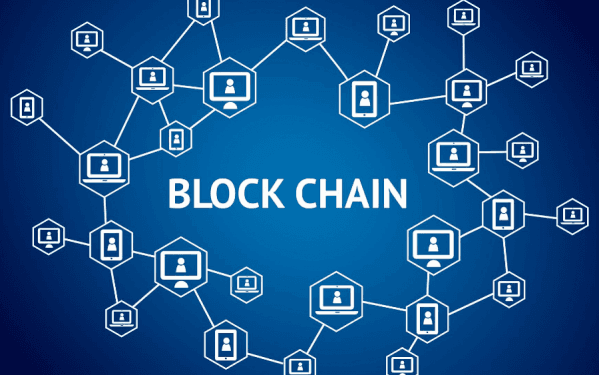
Many of you may have heard this term and wondered what exactly it was about. In elementary terms, one can say that a Blockchain is essentially a distributed digital "ledger" that keeps a list of records and allows the sharing of information in real time.
This ledger can therefore be considered a database. Members with access to the database validate the data in a specific block by means of a consensus protocol between members, using algorithmic computations that employ cryptography (methods vary according to the technology and database involved). Validated blocks are then linked in sequence to the previous blocks using timestamps and other unique information (hashes), thus creating a chain of information blocks. Hence the term Blockchain!
Sequentially added blocks are almost impossible to modify once validated and stored on the relevant block chain. A blockchain can be public (permissionless) or private (permissioned), depending on the intended purpose and objective. Public means that anyone running the appropriate blockchain protocol can read or write information on the block chain (the best example is the Bitcoin block chain); a private block chain means that only designated users can read or write on that block chain (as with the Hyperledger protocol implemented by the giant IBM for its clients).
In what I hope are simpler terms, the Blockchain is a distributed consensus technology/system that allows transactions and other operations to be executed securely and in a controlled manner directly between the parties, without there being a central supervisory authority (or trusted third party such as an insurer, banker or notary, for example… we will see this in detail below), simply because the transactions and all operations are validated by the entire network.
According to the French mathematician Jean-Paul Delahaye, one must therefore imagine the Blockchain as "a very large notebook, that everyone can read freely and for free, on which everyone can write, but which is impossible to erase and indestructible." It is the first technology that allows a transfer of value (asset) digitally from a source to a destination. This, in addition to the rest, is what gives it its character of a disruptive, even revolutionary, technology!
Dom Steil, another entrepreneur and author of many articles on new technologies, fairly clearly underlines this idea of revolution as follows:
"The Blockchain is inherently powerful because it is the backbone of a new kind of distributed, open-source transfer and storage mechanism. It is the necessary third party for the functioning of many trust-based systems. It is the universal balancing sheet used to know and verify who holds various digital rights. Just as the Internet was the basis for many applications other than email, the Blockchain will be the basis for many applications other than a payment network. We are at the earliest moments of a new age for everything that is possible through a decentralised network of communications and computations."
The notion of smart contracts
While the Blockchain was, at first, only the technology that supported bitcoins, it quickly became obvious that it could be used for purposes other than cryptocurrency. In summary, anything transactional—financial or not—can be placed on a blockchain with the same principle: guaranteeing trust, while being more efficient, on the one hand by offering better fluidity and speed of transactions, and on the other by sharply reducing their costs, simply by eliminating the operational bottleneck known as the "trusted third party". It is from these new uses that the true revolution is born, well illustrated by what are called smart contracts!
First developed on the Ethereum platform, smart contracts…
Will the continent's leaders know how to leverage Africa's techno-geopolitical position?
« Cyber » draws its origins well beyond computing. A neologism with ancient roots.
A pan-African digital currency could be a strategic tool serving the continent's emancipation.