

Strategy
Training African cyberstrategists: an imperative!
Without a generation of strategists trained to think cyberspace, Africa will remain a spectator of global digital power dynamics.
1 min read
The literature on cyberstrategy is growing, but Africans are notably absent from it. Time to fix that.
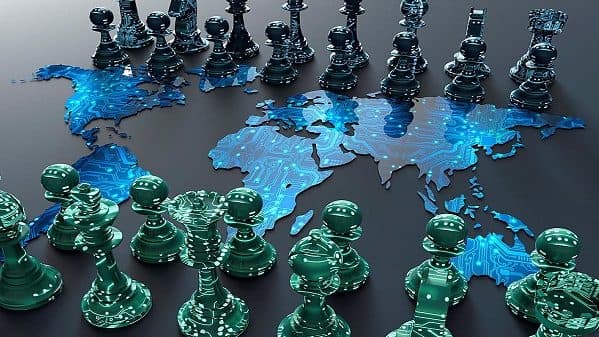
The rapid evolution of modern technologies and the growing place they keep occupying in every aspect of our daily lives continue to raise questions of every kind (social, societal, economic, political, military, strategic, etc.) for specialists and other informed observers. The advent of new technologies, such as artificial intelligence and NBIC (Nanotechnology, Biogenetics, Information Sciences and Cognitive Sciences), breathes life into currents of thought such as "transhumanism"! This idea that humans will be able to rely on technological and digital modernity to tame ageing and live forever is nonetheless food for thought…
This is only one example among many possible outcomes of this ongoing revolution. Today there is (in the West and in China at least) an "app" for almost every activity that might be carried out in a day, from sunrise to sunset. During the health crisis that has shaken the world since early 2020, the proliferation of applications and other online platforms making it possible to live differently while fighting the virus is a perfect illustration.
According to the predictions of some rather serious specialists, this interaction between humans and digital technology will only grow, to the point of arriving at the human 2.0 who, [it is said], will live more than a thousand years, with an impressive intelligence quotient and not a single wrinkle on their face… in any case, that is what the proponents of transhumanism such as the founders of Google (Larry Page and Sergey Brin), among others, promise us.
But is this really the future we want for our society? Who are the actors that have control over these technologies that fill our lives? What are the real stakes (from every point of view, particularly security, defence, political, economic, strategic, etc.) for the stakeholders? What questions does this raise about our current model of society, and how will it be modified? What actions can we undertake so that this evolution remains consistent with our values and our vision of the world?
These are all questions that politicians, scientists, soldiers, engineers and academics alike (and surely others I am forgetting) have not failed to ask themselves in the face of this relatively new and not yet mastered phenomenon. While all welcome the positive impact that the digital revolution can have on the development of societies, these actors have clearly observed that the speed and depth of the resulting changes can escape all control and lead to abuses. Beyond the possible "immortal humanoids", acts of cybercrime and other cyber-aggressions are growing exponentially, given the attack surface that is widening at the same pace as the digitalisation of processes and means of production, as well as the advent of the Internet of Things. Thus, faced with the new cyber-threats that follow and their potential impact on the vital interests of nations, responses through cybersecurity, and even cyberdefence, now prove insufficient.
This is where the need arises for states to conduct deeper reflection on the question, and to develop a thinking of information and communication science and technology grounded in their vision of the world. The aim is to better master the development of cyberspace, the development and uses of all these new technologies, in order to derive the best from them in the service of collective prosperity—all while trying to avoid or contain any form of abuse threatening their values and their model of society. To meet the challenge, most of the major powers have moved towards a new way of approaching the question, a new paradigm: cyberstrategy.
The very term cyberstrategy is a compound word, formed from the prefix "cyber" and the noun "strategy". Considering that the prefix cyber here refers to "that which is proper to cyberspace", it can therefore be understood prosaically as the strategy of cyberspace, or the strategy within cyberspace.
Without a generation of strategists trained to think cyberspace, Africa will remain a spectator of global digital power dynamics.

In an interconnected world where technology is a lever of power, Africa stands at a decisive turning point.

Power is a long-debated concept. Applied to cyberspace, it opens an unprecedented strategic window for Africa.